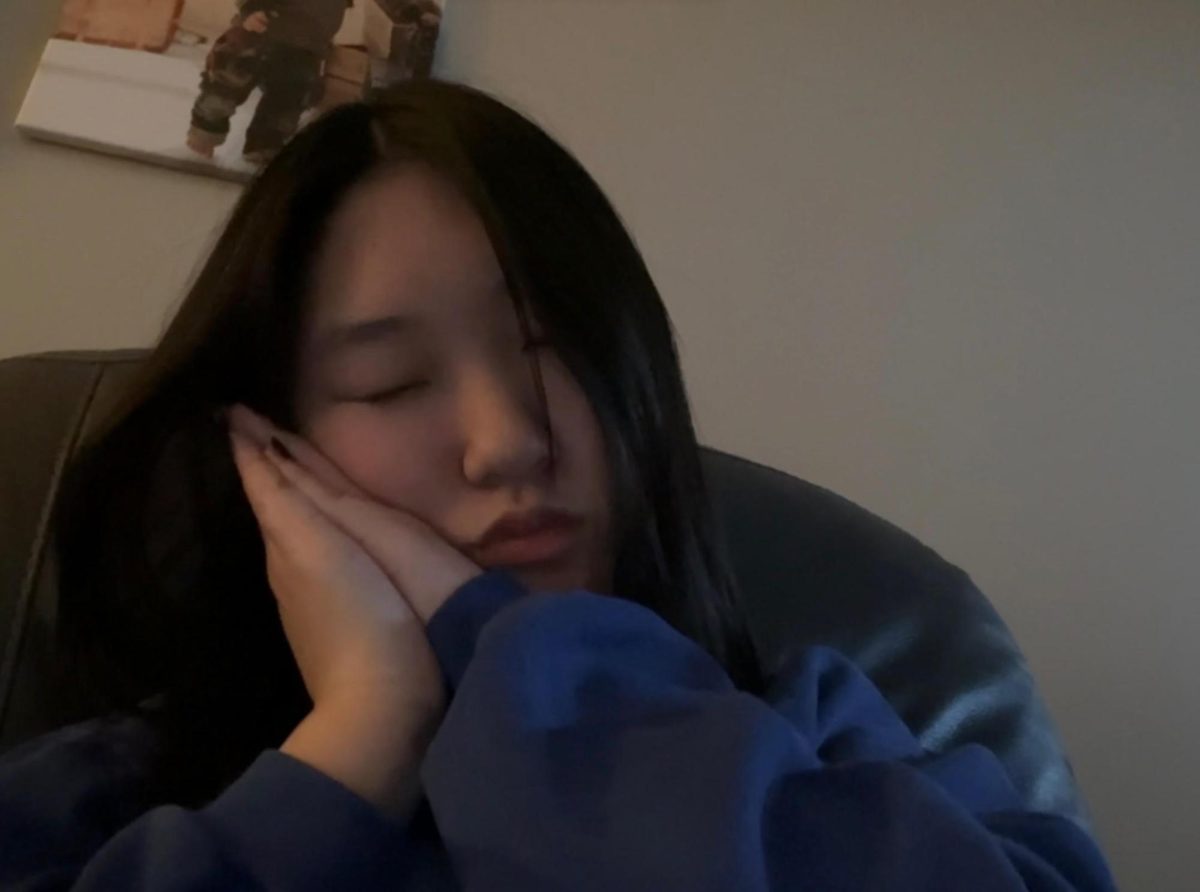
Sleep is elusive, especially so for teenagers. It is important — more important than we give it credit. Most people treat it as a less-than, something that does not hold as much weight as other needs. But sleep deprivation is a serious issue with heavy symptoms most people have adapted as a part of their life; it has become normal.
It is not really their fault, however. Sleep is clouded by a thick haze of misinterpretation and misinformation, people mistaking and mis-correcting others over their own misunderstandings of what has become a health enigma in popular culture. A common example is the notion you can “catch up” on lost sleep. How much you sleep does not matter nearly as much as consistency, as drastic shifts in the amount of sleep you get only stirs your circadian rhythm further. Circadian rhythms are biological clocks core to an organism that shift with time and day. It is what tunes your internal organs and functions to the rotation of the sun and moon!
Sleeping out of a pattern can confuse your circadian rhythm, leaving your body struggling to attune to its surroundings. This leaves people with a higher risk of ailments, such as obesity, mood disorders, blood pressure problems, and cancer. Naps are sort of an exception, as they can even be beneficial, but it really depends on how long you nap. Short naps are the safest, but long naps tend to be disruptive. There are other alternatives to waking yourself up, however.
Most of us (teenagers) are reliant on (or addicted to) caffeine. Although useful, it is not exactly a secret that it carries its own drawbacks. Many people jump to conclusions, claiming that caffeine hurts sleep, but it does not always — sometimes it is just a matter of timing.
I interviewed a student at Greenwood High School, Ashlyn Johnson, on her sleeping patterns and caffeine intake. She expressed that caffeine has not ever interfered with her sleep, but she does claim that “we all do not get enough sleep,” saying that good sleep comes “once in a blue moon.”
There is plenty of debate over teenagers and their sleep — most of which is centered on the idea that we should not be waking up as early as we are because our natural call to sleep starts later, so we should wake up later too. However, changing how school is structured is a tall order, so none of these debates have really come to any sort of action, which makes sense, and although no one asked, I think that sucks.
All of the peers of mine I know are tired, and all they are told is that they should catch up on sleep when they can. It does not work that way; it only makes it worse. Sleep deprivation spirals out of control throughout middle and high school with little to no remedy other than slap-on band-aid fixes that leave it worse the next morning. A lack of sleep can be dangerous. Even cutting it for one hour can have a serious effect on your health, mood, and behavior, according to Dr. Reut Greuber. Sleep is as crucial as eating or drinking, and it should be treated that way — but then again — do we even take food seriously? Maybe our health is just an afterthought.