
Artificial Intelligence has been on the rise for decades, but it has only recently become available for widespread use. ChatGPT launched in November 2022, Claude.ai in July 2023, and Google Gemini in December 2023. According to the Pew Research Center, about 33% of Americans have used an AI chatbot before, and AI experts believe that number may be closer to 98%. Mary Lay, a sophomore, said, “I think that almost the whole world uses it, because even if they don’t use it intentionally, it’s on almost every website.” Unfortunately, the intrusiveness of AI has led to even further environmental problems. For example, if you use Google to search for something, Google Gemini comes up toward the top of the screen. This contributes to the millions of gallons of water used in AI data centers per day. Are there ways to curb this issue? Retaj Ramadan, a sophomore at Greenwood, had some things to say.
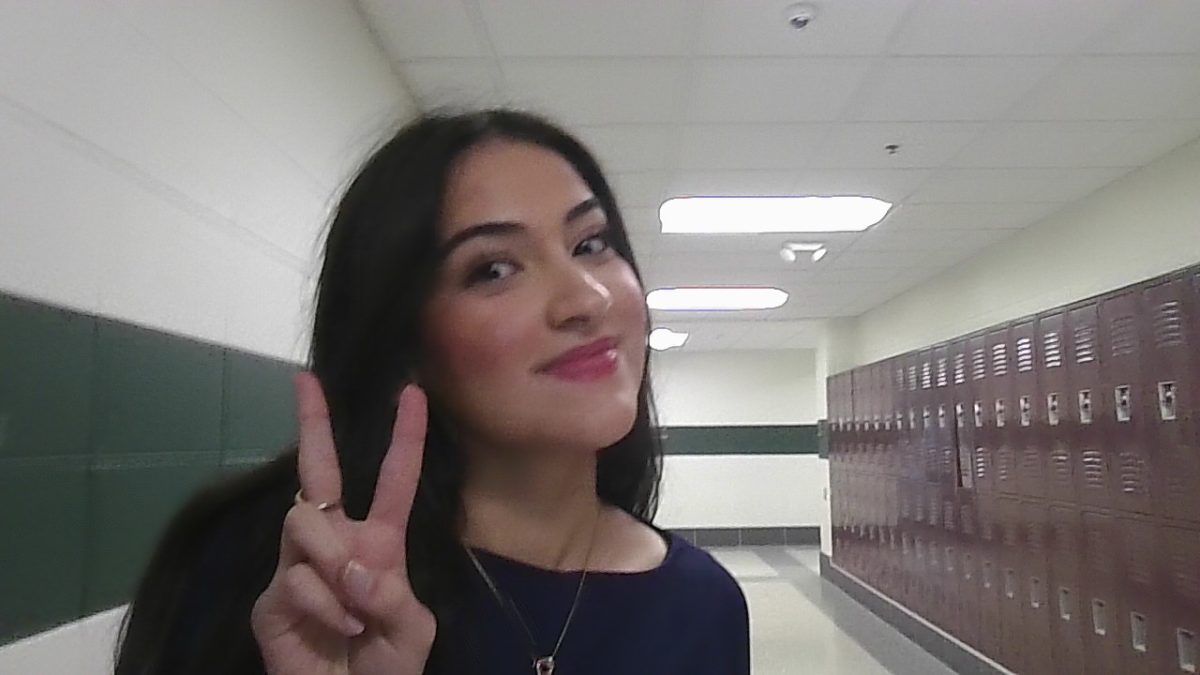
Standing under the bright lights on the upper floor of Greenwood, Ramadan shared her thoughts on AI and ways that she can overcome her use of it and influence others to do the same. “I use AI pretty much daily. It’s pretty useful sometimes, but sometimes it can be bad for the environment.” When asked about her attitude towards AI, she said, “It’s pretty positive, honestly, it’s very useful, and it can be really useful for not just classwork, but something to help you with things like mental health.” Moving down the hallway, she was asked about how AI computer systems contribute to pollution. “Computer systems, they take a lot of space obviously, and artificial intelligence is a very big issue in the environment, so it’s taking up a lot of space and storage,” she responded.
Shifting the topic towards change and improvement, she was asked about how to determine when using AI is necessary. “Using AI is necessary because you can decide in many ways on how to use it, like it can be used for a job or just a class, and it can also answer all of the questions that you’ve been wondering.” Next, she discussed what habits she can pick up that will decrease her use of AI. “I use a lot of AI, personally,” she laughed,” the one thing I could probably decrease about how I use it a lot would be staying away from relying on it because it does give you some wrong answers.”
Talking about encouraging improvement in others, she was asked about how schools can encourage less AI use. She answered, “Schools could probably ban AI from their Chromebooks, but it also doesn’t stop them from using it on their phones.” Walking into the freshly-opened hallway upstairs, she was asked how she could influence others to decrease their use of AI. “I could limit my usage of AI by just taking a break from it, and making sure everyone feels the same because we all know in the future, it’s going to be a bigger problem.”